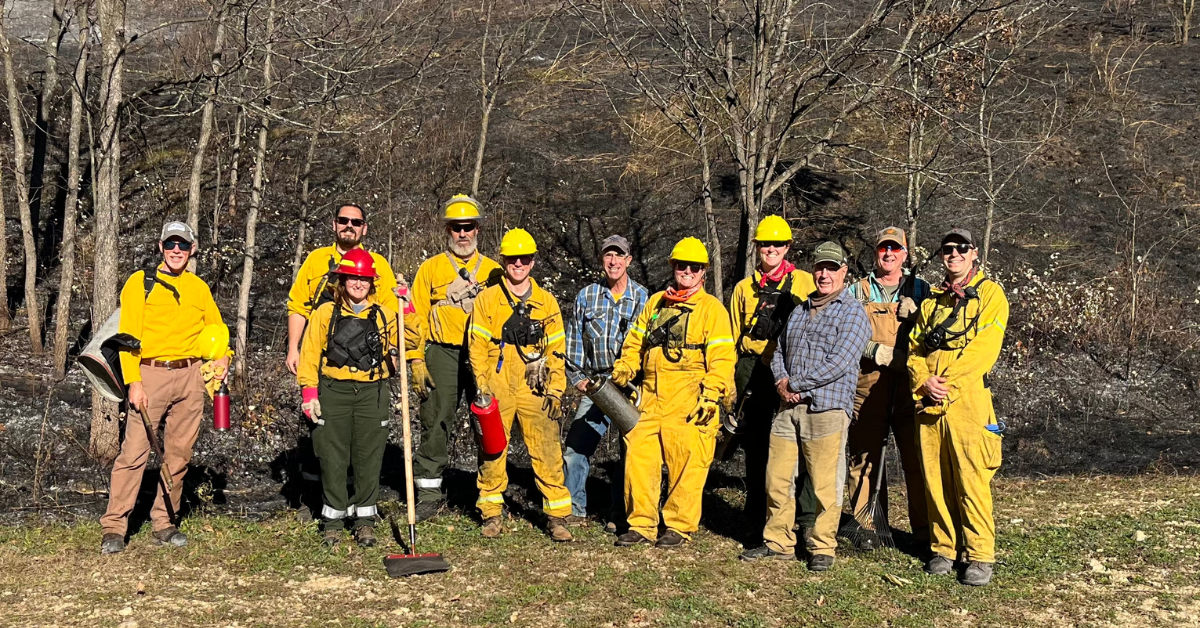
Learn to Burn led by Pheasants Forever on private property in Dane County. Photo by Andy Bingle.
I have the good fortune of working with superheroes who have superpowers every day. They don’t shapeshift or control the elements. Instead, they bring relationships, connections, trust, technical expertise, and financial and human resources to make progress on complex conservation challenges. The superhero team I work with is called the Southern Driftless Grasslands (SDG) partnership, and we are a combination of non-profit and governmental agencies that are leveraging our superpowers to maintain and increase grasslands in Southwest Wisconsin.
Like any superhero team, we face evolving challenges. However, instead of facing a giant monster in downtown New York, our partnership experiences challenges in the form of shifting funding sources, limited capacity, changing policies, and unexpected disruptions.
Each time we face a challenge like this, we look across the partnership and ask: whose superpower can we leverage right now?
Here are three challenges we recently overcame as a partnership by leveraging partners’ superpowers.
Challenge 1: Increasing Prescribed Fire on Private Lands
However, many landowners face barriers: limited technical skills, lack of social connections, and the high cost and limited availability of contractors. To address this, the SDG partnership pursued a multi-year grant to fund several full-time staff members who could develop an educational program helping landowners burn their own properties with neighbors and volunteers.
But no partner had previously secured a grant of that size for an SDG project. So the partnership asked… “Who has the superpower to apply for, manage, and navigate a complex national grant in the name of an SDG initiative?”
Pheasants Forever raised their hand.
With experience securing and managing large federal grants and the capacity to hire full-time staff with partner support, Pheasants Forever (PF) applied for and received $750,000 from the National Fish and Wildlife Foundation (NFWF).
In 2025 alone, the Prescribed Burn Education program engaged 68 landowners and community members through three full-day trainings and 10 educational community burns, impacting 148 acres. It has also helped launch the exploration of self-sustaining, landowner-led Prescribed Burn Associations – an important step toward expanding prescribed fire on private lands in southwest Wisconsin.
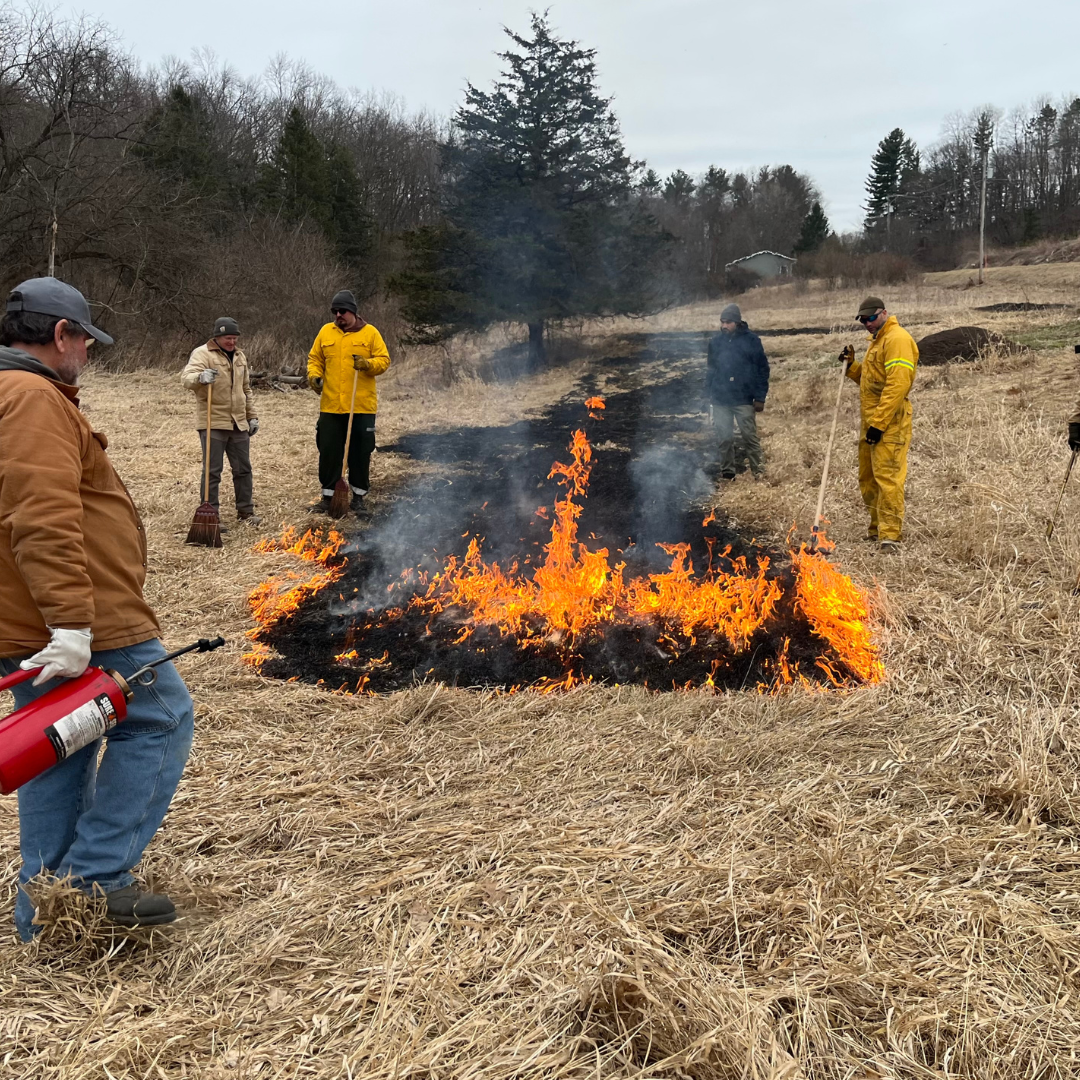
Landowners learn about burn breaks. Photo by Andy Bingle.
Challenge 2: Securing and Managing Funds for Landowners to Manage their Land
PF began searching for funding opportunities and identified the Cornell Lab of Ornithology’s Land Trust Bird Conservation Initiative grant. However, the grant preferred applications from accredited land trusts, which PF is not, and required an organization able to quickly distribute funds to landowners. So the partnership asked… “Who has the superpower of being an accredited land trust and can administer and pass through funding to landowners to benefit the Prescribed Burn Education program?
The Driftless Area Land Conservancy raised its hand.
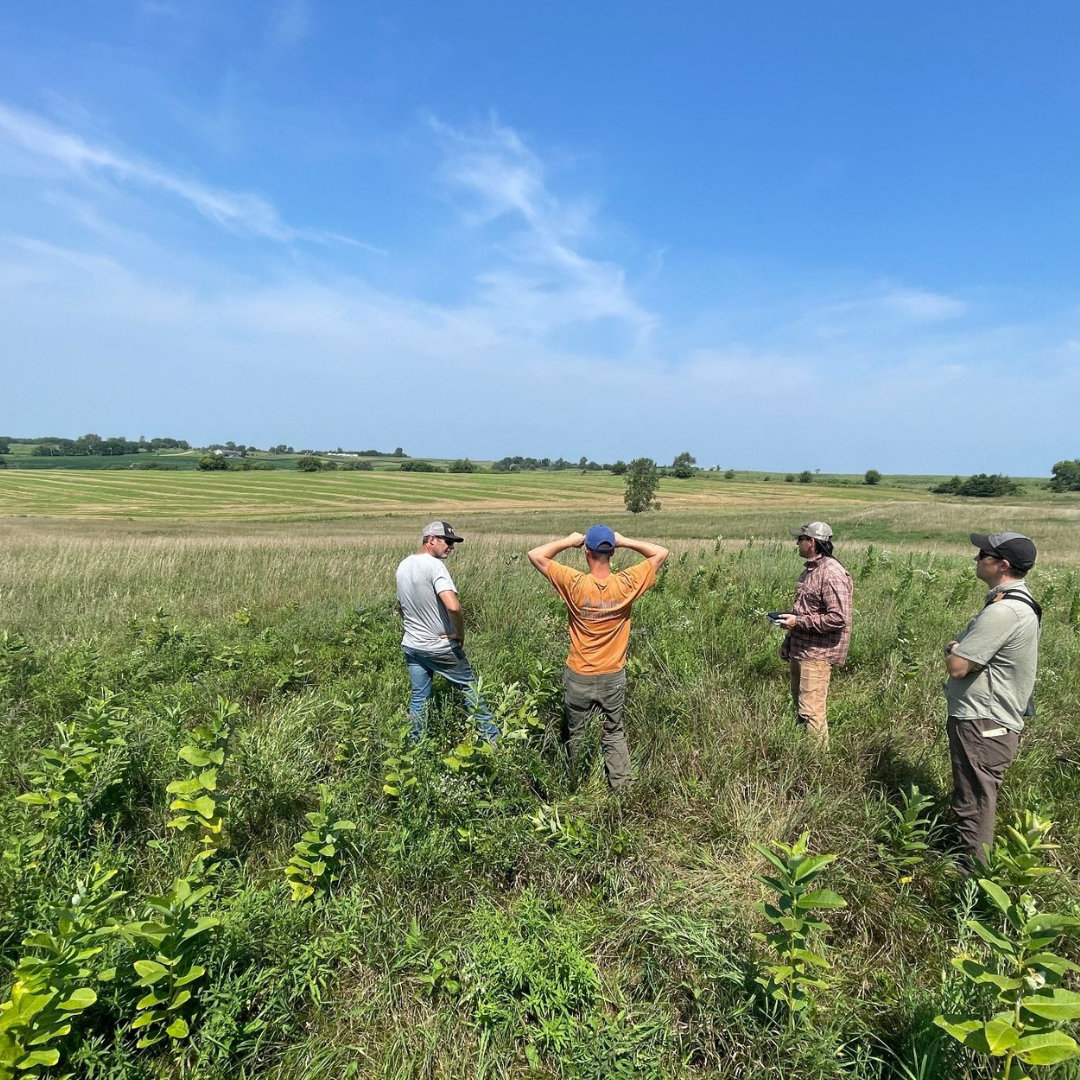
Newly protected within the Perry Primrose Bird Conservation Area. Photo by Stephanie Judge.
DALC, an accredited land trust with an already developed process for passing funds through to qualified landowner projects, applied for the grant. The result: DALC received $25,000 to support the SDG Prescribed Burn Education project led by PF staff. Of that amount, $15,000 will be distributed to at least ten landowners to implement management practices that benefit grassland birds in priority areas of southwest Wisconsin.
Challenge 3: Identifying Public Funding Sources for Land Protection
However, 2026 marked the first time since the 1980s that the program was not reauthorized, leaving partners without a key source of funding for land protection. At the same time, federal grants for land protection have substantially slowed or stalled outright. So the partnership asked…“Who has the superpower to provide more access to public funding for land protection projects?”
Dane County raised their hand.
In response to different partners communicating the difficulty they are facing with a lack of state and federal funding sources, Dane County increased its Conservation Fund budget for 2026 and increased its possible project funding percentage from 50% to 75%.
Change: The Only Constant
If there is one constant in conservation, it is change. Budgets fluctuate, policies change, and landownership shifts. The systems that continue to make a difference are those resilient to change. And one of the most reliable sources of resilience is strong networks – networks of people and organizations who leverage each other’s superpowers and step forward when the moment calls.
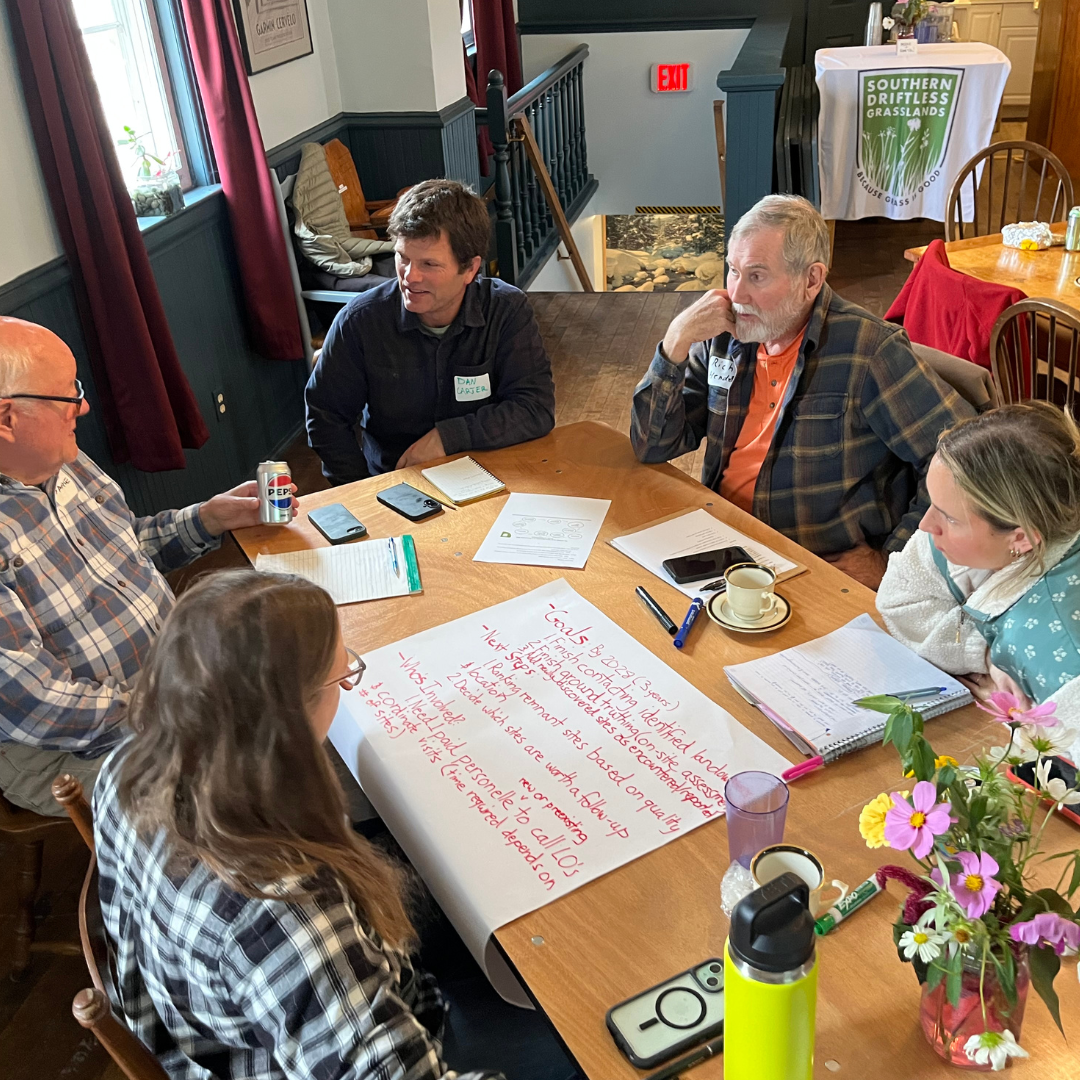
Partners discuss land management strategies. Photo by Andy Bingle.
The provided examples demonstrate how the SDG partnership draws on the strengths of each partner to remain resilient. I see these superpowers in action every day: acting quickly on land purchases, rallying support for a partner pursuing a grant, or turning to someone with technical expertise on how a Regal Fritillary butterfly might respond to changes in vegetation. These contributions happen so often that they sometimes go unnoticed.
But superpowers aren’t limited to agencies, organizations, Avengers, or little dogs in uniforms – we all have them, including you. On your next bird walk or drive to the grocery store, ask yourself: What is my superpower? What role do I play in this system?
When we recognize our place within a larger system – and the strengths others bring – collective action becomes possible. And collective action brings real results in a changing world, whether that means expanding grasslands across a landscape, influencing change in your community, or helping a neighbor care for their land.
So talk with your neighbor. Volunteer. Go for a walk with a group. Most importantly, stay engaged.
To infinity and beyond!
Written by Andy Bingle, SDG Program Manager, for DALC’s 2026 Winter/Spring Newsletter
DALC is the coordinating member of Southern Driftless Grasslands, who actively supports the conservation of grasslands in Southwest Wisconsin to benefit the region’s wildlife, water, farms, and communities.