by Katie Cervenka | Aug 18, 2026 | Conservation, Land Management, Staff Updates
You might know how it feels – that moment you realize you have a rare plant or animal on your land –it’s SO exciting! Sometimes you’ve made this discovery after years of hard restoration work – you’ve removed brush and burned a prairie remnant, and there it is – that flower you’ve never seen before is peeking up and vindicating your efforts! You feel so rewarded for the hard work and financial investments made.
Other times, the discovery can be daunting, because that species is rare for a reason, usually having to do with declining habitat quality across the broader landscape, so if you want to maintain its presence and viability on your site, you’re going to need to be proactive.
In 2012, DALC established the Erickson Wetlands Conservation Area after purchasing 220 acres on the Pecatonica River from Alex and Mary Erickson. Before this acquisition, DALC had only used conservation easements as a tool for land protection. Now the organization was ready to consider managing our own land, but we needed to start small. Over the years, DALC and dedicated volunteers pulled weeds, cut brush, planted a new prairie, and conducted a few prescribed fires in the site’s oak savanna. This work was important and improved the site, but by 2022, we were ready to do more, and we needed to better understand the site’s wetlands. If we didn’t know what was there, we wouldn’t be well-equipped to prioritize our restoration work across the property.
In the summer of 2022 – my first with DALC –wetland ecologists Pat Trochlell and Tom Bernthal surveyed the site’s northeastern zone – a matrix of southern sedge meadow and emergent marsh. Southern sedge meadows have become exceedingly rare because so few remain intact. Many were drained for farming, and many more have been inundated with aggressive invasive plants like reed canary grass and hybrid cattail. Yet this area seemed to be in good shape. What was there, and what conditions were allowing it to persist?
Wetland ecologists Pat Trochlell and Tom Bernthal surveying along the entry boardwalk (Summer 2022).
Pat and Tom made some great discoveries, including northern manna grass (Glyceria borealis) and the lesser purple fringed orchid (Platantherea psycodes). This grass discovery was significant because the species had never been previously located in LaFayette County. And, while that particular orchid may be called “lesser,” it was as tall as my four-year-old son! Pat and Tom also speculated that past human disturbance – in the form of an old railroad grade cutting through the preserve – had paradoxically spared this sedge meadow from Pecatonica River flooding that would have otherwise inundated the site with invasive seeds. Some of the site’s sedge meadows and marsh were in excellent shape, but other areas were only fair because of altered hydrology and invasions by shrubs and cattails.
To make any restoration journey successful, prioritize your site’s gems, triage your site’s worst weeds, and consider a step-wise, adaptive approach so you can stay focused, make progress where it matters most, and pivot if the site responds differently than you expect.
Pat and Tom’s work determined that to maintain and expand Erickson’s sedge meadows for those special orchids and other plants, DALC needed to reintroduce fire to that area as soon as possible. We also needed to begin removing excessive brush and trees to reconnect the river to the meadows.
Why? From a functional standpoint, fire would not carry from the site’s trail firebreaks through dense shrubs and trees to reach the meadow, and it was impractical to install extensive burn breaks within the meadow itself. Furthermore, removing “predator perch” trees, opening up horizon lines, and removing hard edges along fields and trails creates more diffuse habitat for area-sensitive wildlife like ground-nesting birds that benefit from more space and softer edges. This work also increases biodiversity by expanding the area where sedges, flowers, and grasses can grow.
DALC forestry mowed excessive woody shrubs from part of the sedge meadow’s perimeter in 2024, covering almost 8 acres that first year. In the spring of 2025, DALC staff and volunteers reintroduced fire, burning the 71-acre sedge meadow and emergent marsh unit Tom and Pat surveyed years prior, as well as an adjoining 54-acre oak savanna unit fronting the Pecatonica River.
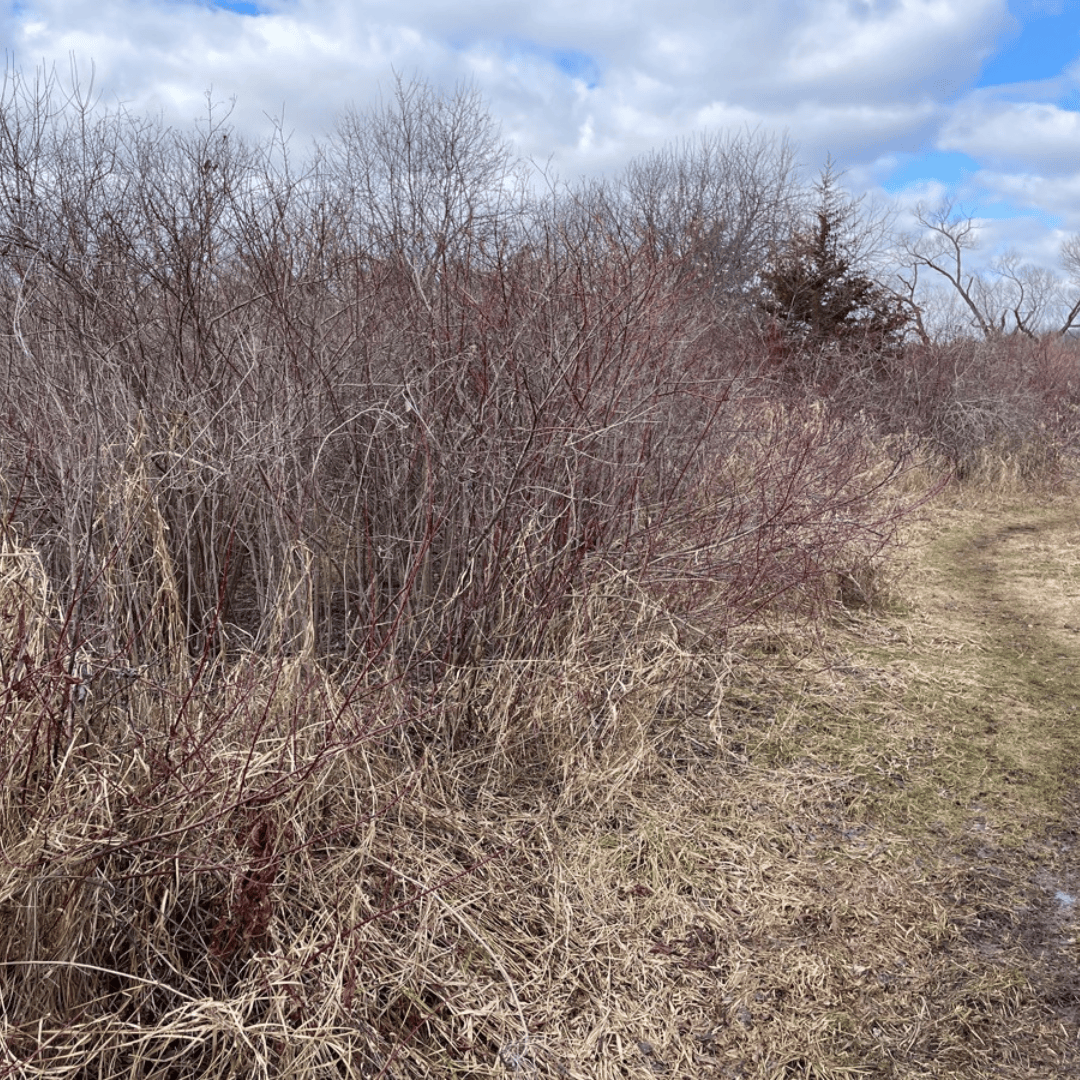
BEFORE forestry mowing along Erickson’s primary walking trail, aggressive native shrubs like dogwood and willow had overtaken the sedge meadow’s edges because no fire had kept them in check.
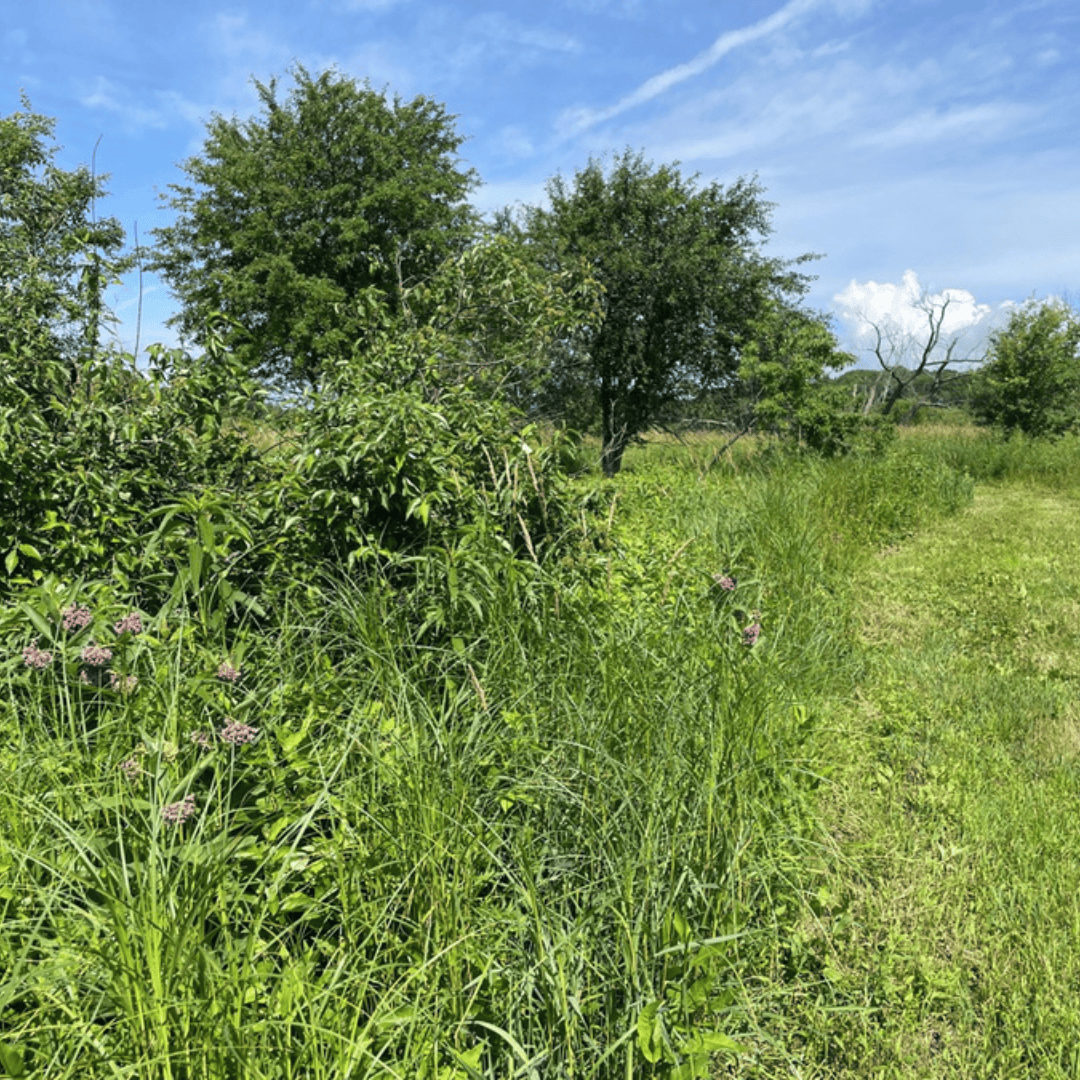
AFTER forestry mowing, sedges, milkweed, and other herbaceous plants expand in areas previously dominated by shrubs. Forestry
mowing in late 2024 maintained native shrubs like plums, viburnums, and hazelnuts while cutting all dogwood, willow, and invasive shrubs
like honeysuckle and buckthorn.
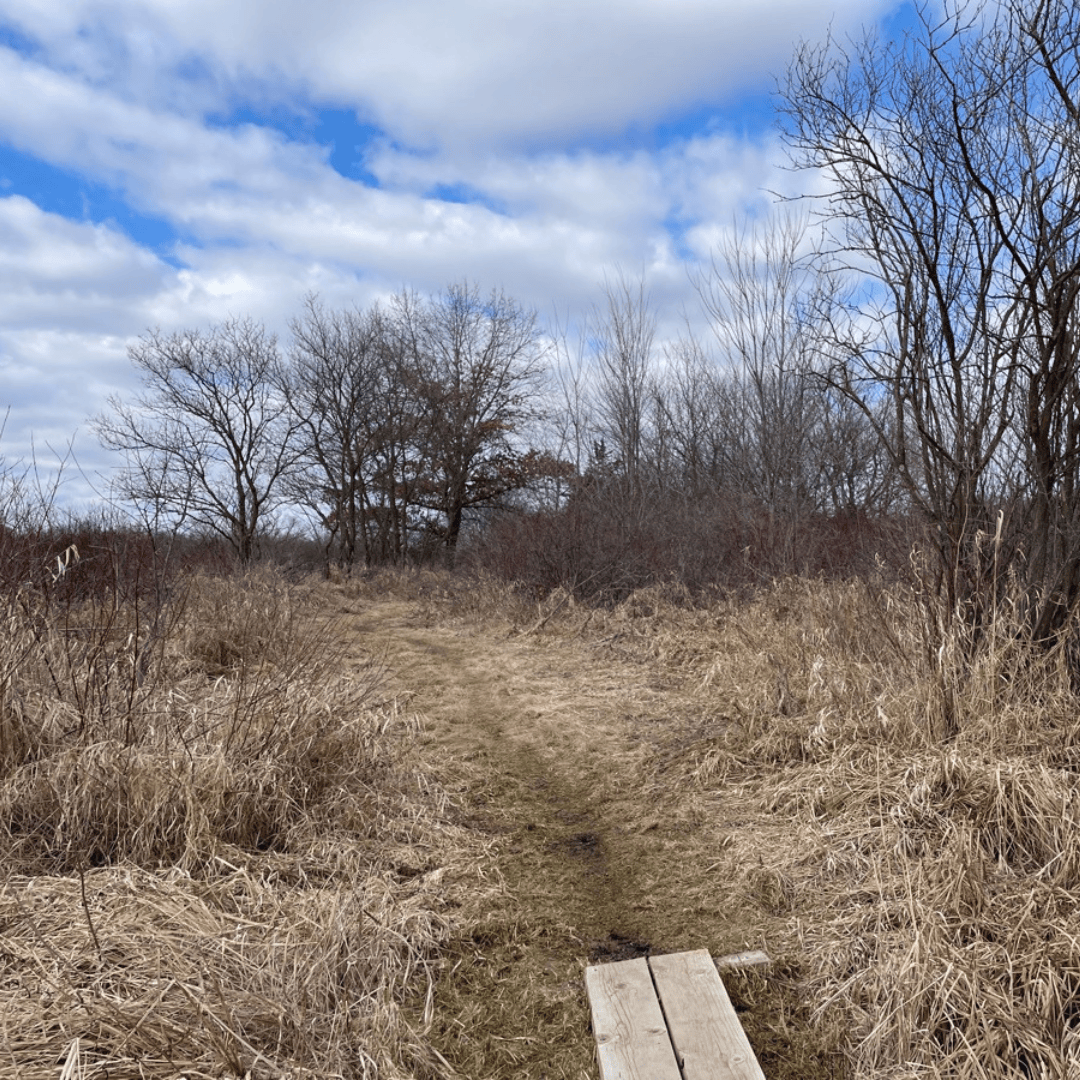
At the boardwalk entry to the site’s main trail, BEFORE mowing dense shrubs to open up the sedge meadow for more flowers and grasses, as well as prescribed fire.
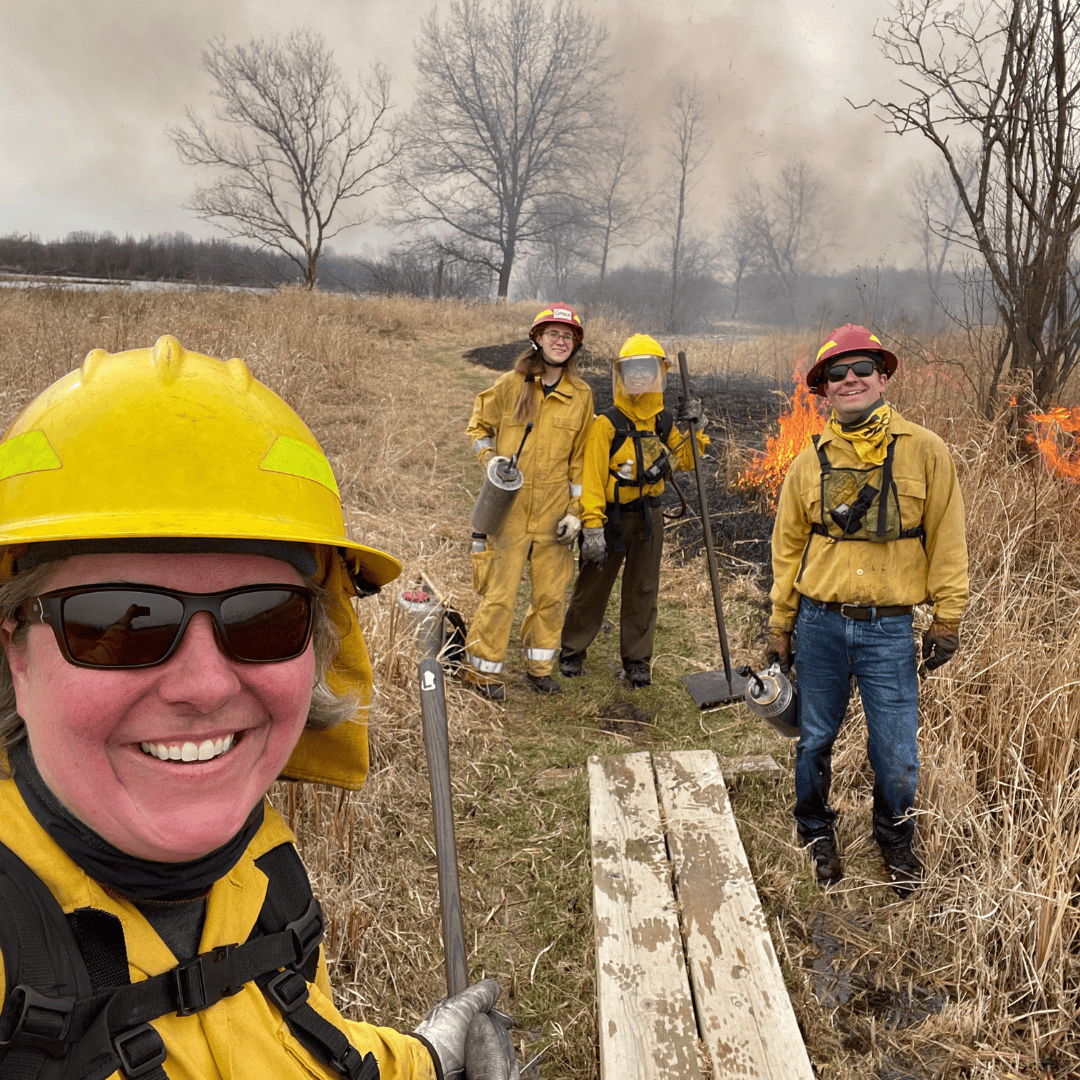
DALC successfully reintroduced fire to Erickson’s rare sedge meadows in April 2025. DALC Conservation Director Stephanie Judge with burn crew members from right, Andy Bingle (SDG Partnership Coordinator), Shannon Roznoski (DALC Easement Stewardship Manager), and volunteer Ella Derosier.
In the summer of 2025, contractors conducted “woody resprout treatments” across areas mowed the previous fall, specifically targeting herbicide applications to invasive woody shrubs like buckthorn and honeysuckle that had been mowed and burned but that weren’t yet killed.
Last winter, DALC pressed ahead, clearing shrubs and thinning a 1990s-era swamp white oak and tamarack plantation remaining along the meadows’ perimeter. We don’t know what will come up from the seedbank in the plantation, but we expect it will be some mix of weeds and gems. With that likelihood in mind, we have monitored throughout 2026 so we can tackle problems while nurturing good surprises.
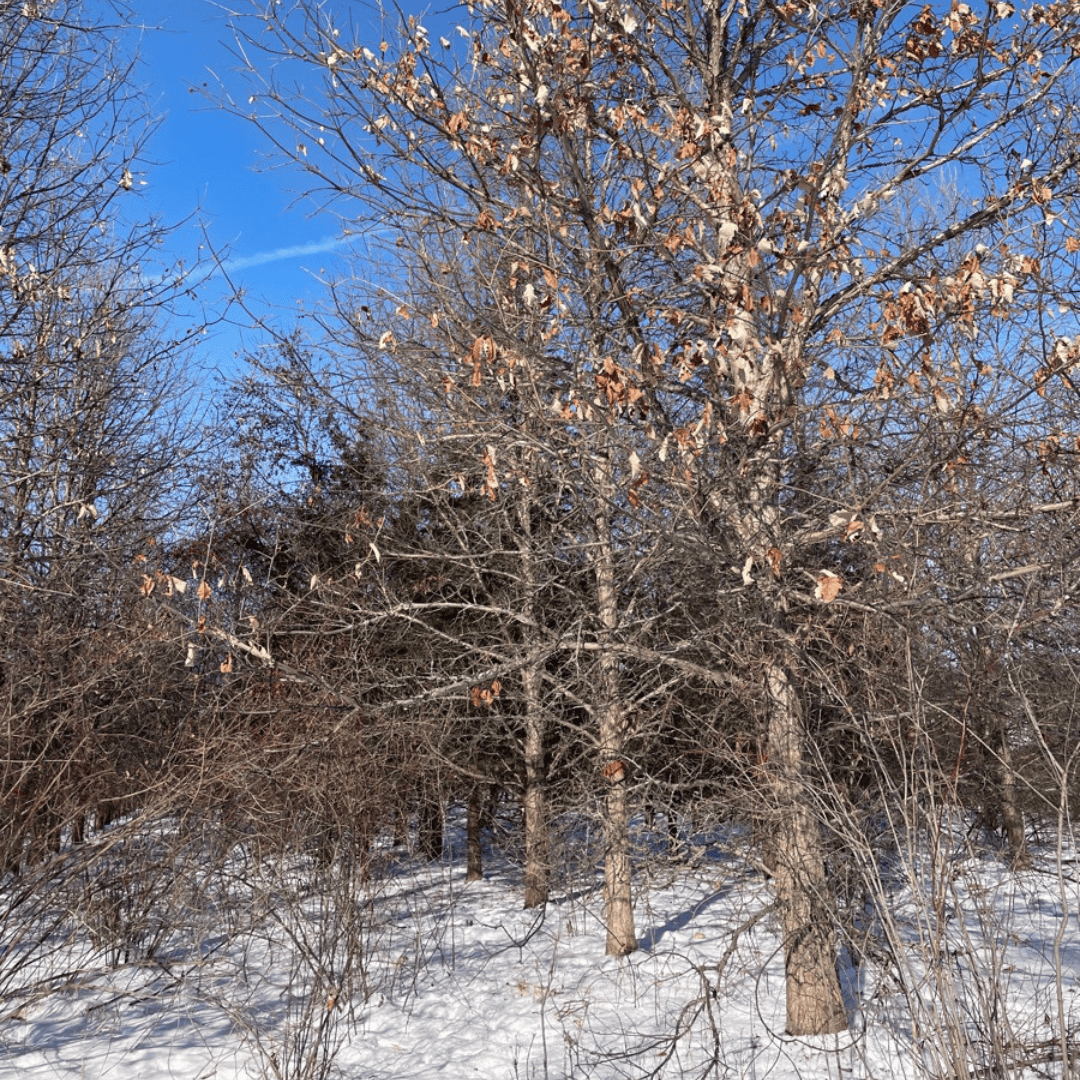
BEFORE thinning a 1990s-era Conservation Reserve Program (CRP) plantation of swamp white oak and tamarack growing at the edge of the sedge meadow.
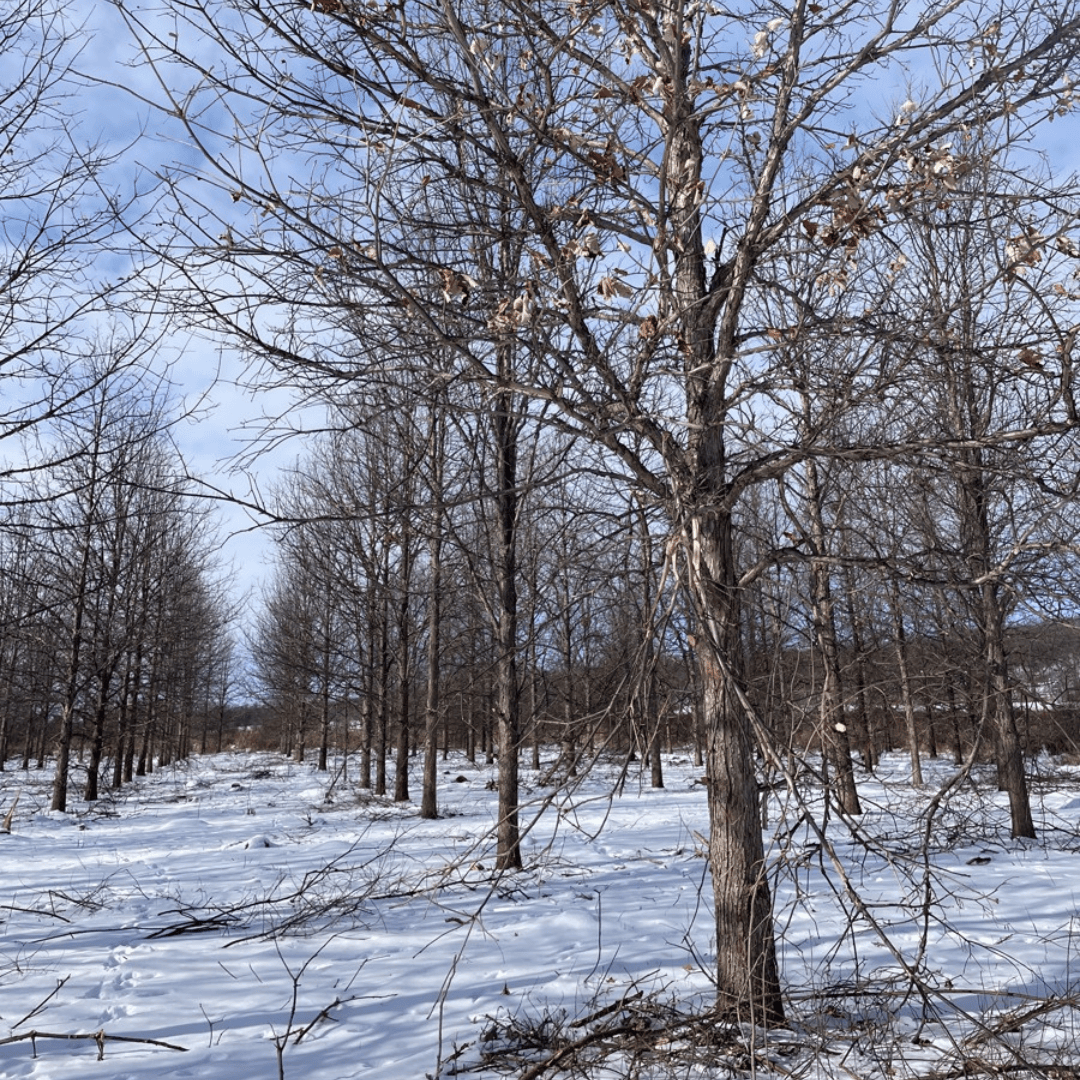
AFTER thinning the plantation in the winter of 2025-26, with a target of moving the area to an open swamp white oak savanna that will host diverse ground-layer vegetation and allow fire to pass through from firebreaks along the trail.
As with any restoration process, this project is a journey – the proverbial marathon and not a sprint. We continually evaluate past progress and challenges, work to maintain our gains, and press ahead unit by unit as capacity allows. We remain inspired by that initial spark and know that any management we provide helps to keep rare species present today and for the future.
Written by Stephanie Judge, Conservation Director, for DALC’s 2026 Winter/Spring Newsletter.
For more information about DALC’s land management efforts, please visit driftlessconservancy.org/land-management/

by Katie Cervenka | Jul 28, 2026 | Connect with Nature, Land Management, Preserves, Staff Updates, Volunteer
There is no single path into conservation. Some people may discover it in college. Others inherit a love of the land from their families. For many, it begins much more simply: by showing up.
For Leah St.Clair, it started with a workday at Wild Oaks Preserve in Belleville, WI. A few years ago, Leah and her mom attended a volunteer day together. At the time, she wasn’t searching for a career or an internship. She wanted to spend time outdoors and help care for a place that mattered. After this experience, she continued coming back.
With every volunteer day came another opportunity to learn. Removing invasive plant species led to conversations about native ecosystems. Brush clearing became a lesson in habitat restoration. Familiar faces became mentors. Before long, Leah was beginning to see conservation through a different lens.
Now an incoming senior from Verona, Leah has spent the past several years learning alongside Driftless Area Land Conservancy staff, volunteers, and partners at Wild Oaks. This summer, she is continuing that journey through an internship she helped create herself, building on the relationships and experiences that began with simply asking, “How can I help?”
After spending time chatting with Leah, there is one major thing that becomes clear: she loves to learn.
Leah is the kind of person who wants to know why a particular plant matters, what birds are returning to restored habitat, or how years of stewardship slowly transform a landscape. She jokes that she’s become a “garlic mustard expert,”. One of her favorite moments during her internship was monitoring bluebird boxes. She gets excited about meeting people who are passionate about their own corners of conservation.
One of her favorite experiences this summer wasn’t even in the field. Leah attended a DALC Board of Directors meeting to understand better the work that happens beyond the field. “It was fascinating to see how different minds come together for a common goal,” she reflected.
The experience helped her realize that conservation is much bigger than she once imagined. It includes habitat restoration, but also private land conservation, agriculture, recreation, partnerships, fundraising, and thoughtful planning. Each piece supports the other.
That growing understanding has shaped how she sees her own future. Leah hopes to study ecology in college because she loves understanding the relationships between people, wildlife, and the natural world. Yet she remains open to wherever her curiosity leads next.
Perhaps the most meaningful lesson she’s learned, though, has nothing to do with career plans. “It is amazing what a small team can do in six hours,” she said. After volunteering at Wild Oaks and actively working in an internship, she’s watched restored areas change season after season. Places that once needed intensive care are beginning to thrive. Those changes didn’t happen overnight. They happened because people kept showing up.
In many ways, Leah’s story reflects something true about conservation itself. Very few people begin as experts. They begin by asking questions. They begin by volunteering for a workday, attending a community event, or striking up a conversation with someone who knows a little more than they do. Curiosity grows into knowledge. Knowledge grows into confidence. And before long, they find themselves becoming part of something larger than they ever expected.
Leah reminds us that conservation is not reserved for just scientists, land managers, or people who have spent their whole lives outdoors. It belongs to anyone willing to learn, lend a hand, and care for the places that sustain us.
A huge THANK YOU to Leah for her ongoing restoration work. We greatly appreciate you!

by Katie Cervenka | May 22, 2026 | Conservation, Land Management
Learn to Burn led by Pheasants Forever on private property in Dane County. Photo by Andy Bingle.
X-Men, The Avengers, The Powerpuff Girls, The Paw Patrol Pups. What do each of these teams have in common? They are a group of individuals working together, each bringing their own skill set and superpowers to overcome a challenge. The key to their success? The diversity of their powers. One may be fast, while the other is strong; one is a quick thinker, and the other is someone who can meditate and change the weather. It is only when their powers combine that they overcome the seemingly impossible feat they face.
I have the good fortune of working with superheroes who have superpowers every day. They don’t shapeshift or control the elements. Instead, they bring relationships, connections, trust, technical expertise, and financial and human resources to make progress on complex conservation challenges. The superhero team I work with is called the Southern Driftless Grasslands (SDG) partnership, and we are a combination of non-profit and governmental agencies that are leveraging our superpowers to maintain and increase grasslands in Southwest Wisconsin.
Like any superhero team, we face evolving challenges. However, instead of facing a giant monster in downtown New York, our partnership experiences challenges in the form of shifting funding sources, limited capacity, changing policies, and unexpected disruptions.
Each time we face a challenge like this, we look across the partnership and ask: whose superpower can we leverage right now?
Here are three challenges we recently overcame as a partnership by leveraging partners’ superpowers.
Challenge 1: Increasing Prescribed Fire on Private Lands
Prescribed fire reduces brush and promotes plant growth that sustains and expands grasslands. In southwest Wisconsin, 95% of the land is privately owned, with most parcels between 40 and 200 acres. Increasing grasslands at a landscape scale, therefore, requires working with hundreds of private landowners to bring prescribed fire to their properties.
However, many landowners face barriers: limited technical skills, lack of social connections, and the high cost and limited availability of contractors. To address this, the SDG partnership pursued a multi-year grant to fund several full-time staff members who could develop an educational program helping landowners burn their own properties with neighbors and volunteers.
But no partner had previously secured a grant of that size for an SDG project. So the partnership asked… “Who has the superpower to apply for, manage, and navigate a complex national grant in the name of an SDG initiative?”
Pheasants Forever raised their hand.
With experience securing and managing large federal grants and the capacity to hire full-time staff with partner support, Pheasants Forever (PF) applied for and received $750,000 from the National Fish and Wildlife Foundation (NFWF).
In 2025 alone, the Prescribed Burn Education program engaged 68 landowners and community members through three full-day trainings and 10 educational community burns, impacting 148 acres. It has also helped launch the exploration of self-sustaining, landowner-led Prescribed Burn Associations – an important step toward expanding prescribed fire on private lands in southwest Wisconsin.
Landowners learn about burn breaks. Photo by Andy Bingle.
Challenge 2: Securing and Managing Funds for Landowners to Manage their Land
After several months of burn training work, PF realized the prescribed fire education team needed additional funding for equipment and meeting expenses – costs not covered by the NFWF grant. The team also identified landowners interested in prescribed fire who lacked adequate burn breaks or had too much brush or trees to burn safely, and who could not afford to hire a contractor.
PF began searching for funding opportunities and identified the Cornell Lab of Ornithology’s Land Trust Bird Conservation Initiative grant. However, the grant preferred applications from accredited land trusts, which PF is not, and required an organization able to quickly distribute funds to landowners. So the partnership asked… “Who has the superpower of being an accredited land trust and can administer and pass through funding to landowners to benefit the Prescribed Burn Education program?
The Driftless Area Land Conservancy raised its hand.
Newly protected within the Perry Primrose Bird Conservation Area. Photo by Stephanie Judge.
DALC, an accredited land trust with an already developed process for passing funds through to qualified landowner projects, applied for the grant. The result: DALC received $25,000 to support the SDG Prescribed Burn Education project led by PF staff. Of that amount, $15,000 will be distributed to at least ten landowners to implement management practices that benefit grassland birds in priority areas of southwest Wisconsin.
Challenge 3: Identifying Public Funding Sources for Land Protection
When a property comes on the market or a landowner considers a voluntary conservation easement, funding for the purchase typically comes from public grants. In Wisconsin, one of the most common sources was the state’s Knowles-Nelson Stewardship Program.
However, 2026 marked the first time since the 1980s that the program was not reauthorized, leaving partners without a key source of funding for land protection. At the same time, federal grants for land protection have substantially slowed or stalled outright. So the partnership asked…“Who has the superpower to provide more access to public funding for land protection projects?”
Dane County raised their hand.
In response to different partners communicating the difficulty they are facing with a lack of state and federal funding sources, Dane County increased its Conservation Fund budget for 2026 and increased its possible project funding percentage from 50% to 75%.
Change: The Only Constant
If there is one constant in conservation, it is change. Budgets fluctuate, policies change, and landownership shifts. The systems that continue to make a difference are those resilient to change. And one of the most reliable sources of resilience is strong networks – networks of people and organizations who leverage each other’s superpowers and step forward when the moment calls.
Partners discuss land management strategies. Photo by Andy Bingle.
The provided examples demonstrate how the SDG partnership draws on the strengths of each partner to remain resilient. I see these superpowers in action every day: acting quickly on land purchases, rallying support for a partner pursuing a grant, or turning to someone with technical expertise on how a Regal Fritillary butterfly might respond to changes in vegetation. These contributions happen so often that they sometimes go unnoticed.
But superpowers aren’t limited to agencies, organizations, Avengers, or little dogs in uniforms – we all have them, including you. On your next bird walk or drive to the grocery store, ask yourself: What is my superpower? What role do I play in this system?
When we recognize our place within a larger system – and the strengths others bring – collective action becomes possible. And collective action brings real results in a changing world, whether that means expanding grasslands across a landscape, influencing change in your community, or helping a neighbor care for their land.
So talk with your neighbor. Volunteer. Go for a walk with a group. Most importantly, stay engaged.
To infinity and beyond!
Written by Andy Bingle, SDG Program Manager, for DALC’s 2026 Winter/Spring Newsletter
DALC is the coordinating member of Southern Driftless Grasslands, who actively supports the conservation of grasslands in Southwest Wisconsin to benefit the region’s wildlife, water, farms, and communities.

by Katie Cervenka | Feb 15, 2026 | Conservation, Land Management, Staff Updates
February Notes from the Field: Written by Stephanie Judge, Conservation Director
While I know February can be a tough month for many, I love the winter, and I love it most when we have snow! Of course I appreciate snow for many of the traditional reasons – it’s fun for kids to play outside, it’s easier to enjoy winter sports, and it brightens what are otherwise some of our darkest days of the year. But, I also love snow (and cold) because it helps us accomplish important land restoration work!
As climate change brings warmer, less predictable winters, we’re increasingly challenged to conduct timber harvests on frozen ground or to burn piles of invasive shrubs. Happily, the winter of 2025/2026 has provided excellent conditions for many of these important activities.
Winter is also a time for site reconnaissance and planning. Frozen ground helps us walk across wetlands without sinking knee deep in muck, scout distances across sites when no leaves block our views, and get out to see land without bugs seeing us.
At Wild Oaks Preserve in Dane County, which will open to the public later this year, DALC and our site partners, the BadgerLand Foundation, removed over 500 black walnut trees where we’re restoring savanna and prairies. Income from the harvest will help fund ongoing work at the site, including a pending hydrological restoration that will re-meander a stream and fill ditches in a previously drained wetland.
Black Walnut harvest at Wild Oaks Preserve.
Photo by Stephanie Judge.
At Erickson Conservation Area in Argyle, where an old plantation of swamp white oaks and tamarack trees was planted back in the ‘90s, we thinned 7 acres into what will eventually become a more naturalized swamp white oak savanna.
Erickson Conservation Area BEFORE thinning.
Photo by Stephanie Judge.
Erickson Conservation Area AFTER thinning.
Photo by Stephanie Judge.
And, elsewhere at Erickson, we gathered with volunteers to burn brush piles collected in past years. On this day – the last of January’s intense cold – we enjoyed the sunny 15 degree conditions along with chili heated to boiling in a cast iron pot on the coals.
DALC staff & volunteers warm up by a fire with chili.
Photo by Stephanie Judge.
Thank you to my colleague Shannon for that wonderful treat, and trick, that she learned while stewarding York Prairie State Natural Area near her New Glarus home!
Whether you’re “a winter person” or not, we know this season has been difficult for all of us as individuals, for our communities and for our country. We also know that “hope springs eternal,” and by this late date in February, the days are getting longer, the natural world is waking up, and we can all feel a little more energy to keep going and keep working toward brighter days and a better future. Thank you for all you do to support your neighbors and communities, including this Driftless community. We SO appreciate you!
Written by Stephanie Judge
DALC Conservation Director

by Katie Cervenka | Feb 5, 2026 | Conservation, Land Management, Staff Updates
We are excited to welcome Kevin Mason to the Driftless Area Land Conservancy team as our new Preserves Manager!
Kevins first came to Wisconsin to attend Lawrence University, and aside from a brief chapter in the Pacific Northwest, the state has been home ever since. Over the years, he has built a career centered on restoring landscapes and helping people connect to them in meaningful ways. Most recently, Kevin spent nearly eight years working with Quercus Land Stewardship Services, where he partnered with private landowners, municipalities, and public agencies to design and carry out ecological restoration projects across southern Wisconsin.
At DALC, Kevin oversees the management and monitoring of our nature preserves and Driftless Trail segments. His work helps guide these lands towards long term ecological health through practices such as prescribed fire, grazing, and other restoration tools. Just as important, Kevin works closely with partners and staff to ensure stewardship efforts are collaborative, thoughtful, and grounding in care for both the land and the people who experience it.
Kevin is especially drawn to stewarding publicly accessible lands and to the many ways people form connections with natural places. He believes those relationships strengthen individual and community wellbeing, and a perspective that aligns closely with DALC’s mission.
Outside of work, Kevin enjoys spending time outdoors hiking, camping, paddling, skiing, and biking, often alongside his family. He is also a musician and songwriter who finds inspiration in the natural world, and on clear nights, he can sometimes be found in his backyard gazing at distant galaxies through a telescope.
“I love that the Driftless Area can surprise even lifelong Midwesterners. It is an utterly unique ecological and cultural landscape with many nooks and crannies and hidden surprises. I love watching a half frozen stream gurgle through a valley in the winter, or a bluff prairie bursting with color in July.”
We are grateful to welcome Kevin to DALC, and look forward to the care, curiosity, and leadership he will bring to our preserves and trails across the Driftless Area!

by Katie Cervenka | Sep 3, 2025 | Land Management, Land Protection, Legacy Society
Presented by Richard (Dick) Cates, August 12th, 2025

On August 12th, 2025, Driftless Area Land Conservancy welcomed all to the Legacy Society Picnic. During this gathering, Gathering Waters had the honor to present the Land Legacy Award to Richard (Dick) Cates and his family for their outstanding commitment to conservation. After the Cates family warmly thanked the Gathering Waters and DALC teams for bestowing such a meaningful recognition for their work, Dick spoke on behalf of the family and offered the following:
“The history of every nation is written in the way in which it cares for its farms, farmers, soil and water, flora and fauna— collectively, the land. So it is my commitment, as a farmer and teacher, to communicate the conviction that the fate of how we care for our land is everybody’s future, everyone’s vital concern.
Perhaps the greatest existential crisis human civilization faces is the destruction of the natural conditions necessary for our own survival. I believe that the most significant work any of us can do at this time in the history of human beings on Earth is to live in reciprocity for her gifts in a way that cares deeply for all she has bestowed.
This is respectful, honorable work. It is work we should all be engaged in—not just those of us who produce food, but all of us who leave any sort of footprint of our time here, supported by the gifts of the Earth.
I have followed my heart through life. A land ethic has guided my journey on this place. The wisdom of my dearest friend, Kim, guided our business in a life-giving direction, and with imagination, we worked together to put together the pieces of a life-sustaining puzzle.
For our family, conservation has indeed not been that feared set of constraints, but a very positive part of our lives, which has involved skill and learning to understand what the land can sustain. I look at the land we tend as a portrait and a statement of self, and to try to understand how we and the land, living together as partners, can do well. That’s an uplifting way to farm and to live. So many of us on the land long for this. It’s a process of finding our way.
Here Kim and I are so many years later, with love in our hearts for our grown children, our grandchildren, and this magical land. We are still here precisely because of Eric and Kiley’s commitment to this land, “a commitment to conservation” as they have taken as their farm tag line.
We feel gratitude for our family, our community, and for the gifts of this place. We feel hope that the next generation of our family on this land and our community will thrive.
One must have faith that as seasons change, the Earth’s gifts will always be there for us if we care for them. The greatest gift we can bestow is to be thankful, to show gratitude, and to accept them with respect, a promise of care, and great humility.
To the next generation of farmers, and to all, we need to— we must— leave a proud legacy. This is what I hope for.
What kind of ancestors do we want to be?
A creek runs through this Driftless land, and it is cold and clear…and the brookies are back.