Activating Your Superpower: Overcoming Challenges Through Partnerships

Activating Your Superpower: Overcoming Challenges Through Partnerships

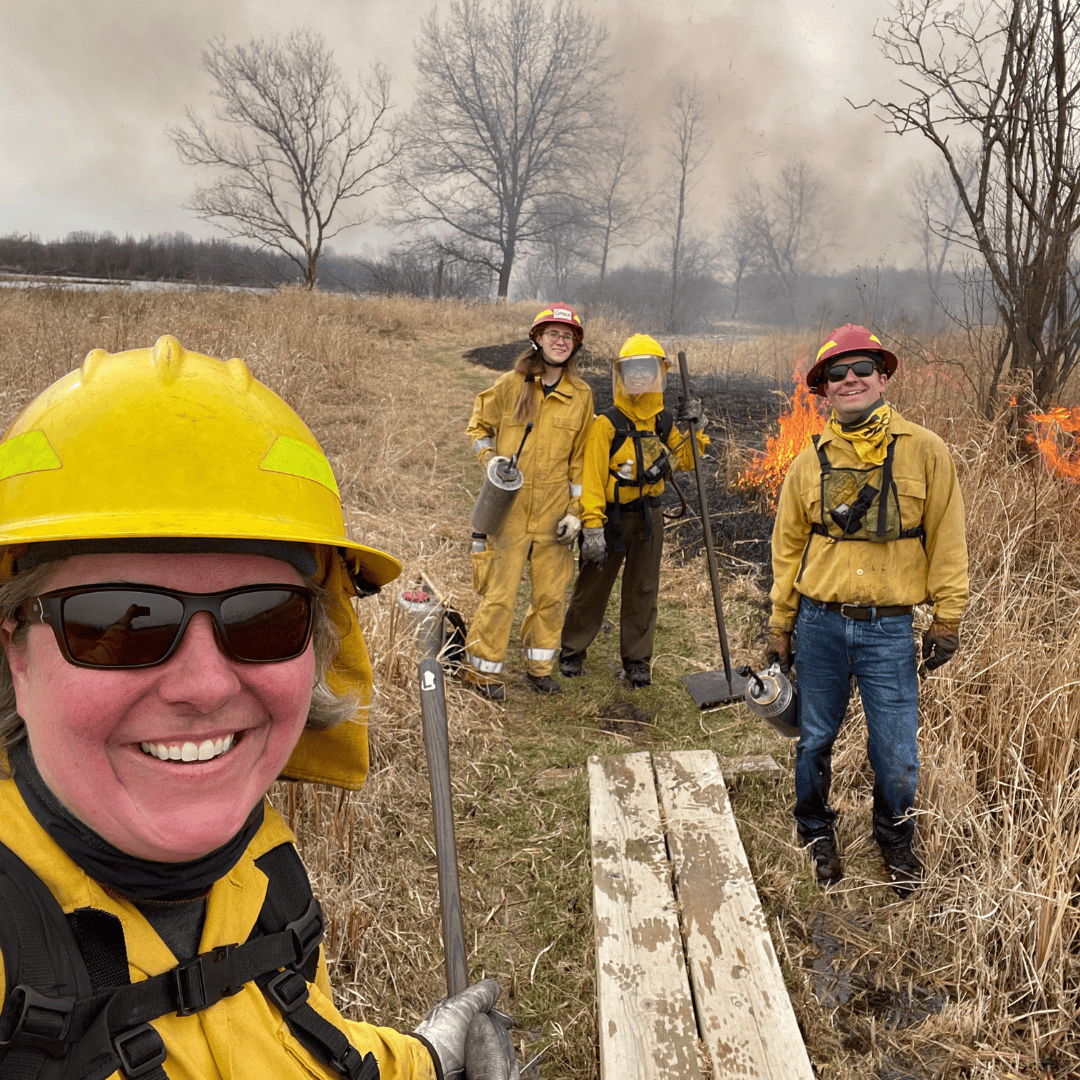
Burn crew smiling after a job.

Learn to Burn led by Pheasants Forever on private property in Dane County. Photo by Andy Bingle.

X-Men, The Avengers, The Powerpuff Girls, The Paw Patrol Pups. What do each of these teams have in common? They are a group of individuals working together, each bringing their own skill set and superpowers to overcome a challenge. The key to their success? The diversity of their powers. One may be fast, while the other is strong; one is a quick thinker, and the other is someone who can meditate and change the weather. It is only when their powers combine that they overcome the seemingly impossible feat they face.

I have the good fortune of working with superheroes who have superpowers every day. They don’t shapeshift or control the elements. Instead, they bring relationships, connections, trust, technical expertise, and financial and human resources to make progress on complex conservation challenges. The superhero team I work with is called the Southern Driftless Grasslands (SDG) partnership, and we are a combination of non-profit and governmental agencies that are leveraging our superpowers to maintain and increase grasslands in Southwest Wisconsin.

Like any superhero team, we face evolving challenges. However, instead of facing a giant monster in downtown New York, our partnership experiences challenges in the form of shifting funding sources, limited capacity, changing policies, and unexpected disruptions. 

Each time we face a challenge like this, we look across the partnership and ask: whose superpower can we leverage right now? 

Here are three challenges we recently overcame as a partnership by leveraging partners’ superpowers.  

Challenge 1: Increasing Prescribed Fire on Private Lands

Prescribed fire reduces brush and promotes plant growth that sustains and expands grasslands. In southwest Wisconsin, 95% of the land is privately owned, with most parcels between 40 and 200 acres. Increasing grasslands at a landscape scale, therefore, requires working with hundreds of private landowners to bring prescribed fire to their properties.

However, many landowners face barriers: limited technical skills, lack of social connections, and the high cost and limited availability of contractors. To address this, the SDG partnership pursued a multi-year grant to fund several full-time staff members who could develop an educational program helping landowners burn their own properties with neighbors and volunteers.

But no partner had previously secured a grant of that size for an SDG project. So the partnership asked… Who has the superpower to apply for, manage, and navigate a complex national grant in the name of an SDG initiative?” 

Pheasants Forever raised their hand. 

With experience securing and managing large federal grants and the capacity to hire full-time staff with partner support, Pheasants Forever (PF) applied for and received $750,000 from the National Fish and Wildlife Foundation (NFWF).

 In 2025 alone, the Prescribed Burn Education program engaged 68 landowners and community members through three full-day trainings and 10 educational community burns, impacting 148 acres. It has also helped launch the exploration of self-sustaining, landowner-led Prescribed Burn Associations – an important step toward expanding prescribed fire on private lands in southwest Wisconsin.

Burn break workshop

Landowners learn about burn breaks. Photo by Andy Bingle. 

Challenge 2: Securing and Managing Funds for Landowners to Manage their Land

After several months of burn training work, PF realized the prescribed fire education team needed additional funding for equipment and meeting expenses – costs not covered by the NFWF grant. The team also identified landowners interested in prescribed fire who lacked adequate burn breaks or had too much brush or trees to burn safely, and who could not afford to hire a contractor.

PF began searching for funding opportunities and identified the Cornell Lab of Ornithology’s Land Trust Bird Conservation Initiative grant. However, the grant preferred applications from accredited land trusts, which PF is not, and required an organization able to quickly distribute funds to landowners. So the partnership asked… “Who has the superpower of being an accredited land trust and can administer and pass through funding to landowners to benefit the Prescribed Burn Education program? 

The Driftless Area Land Conservancy raised its hand. 

Newly protected within the Perry Primrose Bird Conservation Area. Photo by Stephanie Judge.

 DALC, an accredited land trust with an already developed process for passing funds through to qualified landowner projects, applied for the grant. The result: DALC received $25,000 to support the SDG Prescribed Burn Education project led by PF staff. Of that amount, $15,000 will be distributed to at least ten landowners to implement management practices that benefit grassland birds in priority areas of southwest Wisconsin.

Challenge 3: Identifying Public Funding Sources for Land Protection

When a property comes on the market or a landowner considers a voluntary conservation easement, funding for the purchase typically comes from public grants. In Wisconsin, one of the most common sources was the state’s Knowles-Nelson Stewardship Program.

However, 2026 marked the first time since the 1980s that the program was not reauthorized, leaving partners without a key source of funding for land protection. At the same time, federal grants for land protection have substantially slowed or stalled outright. So the partnership asked…“Who has the superpower to provide more access to public funding for land protection projects?”

Dane County raised their hand. 

In response to different partners communicating the difficulty they are facing with a lack of state and federal funding sources, Dane County increased its Conservation Fund budget for 2026 and increased its possible project funding percentage from 50% to 75%. 

Change: The Only Constant

 If there is one constant in conservation, it is change. Budgets fluctuate, policies change, and landownership shifts. The systems that continue to make a difference are those resilient to change. And one of the most reliable sources of resilience is strong networks – networks of people and organizations who leverage each other’s superpowers and step forward when the moment calls.

Partners discuss land management strategies. Photo by Andy Bingle.

The provided examples demonstrate how the SDG partnership draws on the strengths of each partner to remain resilient. I see these superpowers in action every day: acting quickly on land purchases, rallying support for a partner pursuing a grant, or turning to someone with technical expertise on how a Regal Fritillary butterfly might respond to changes in vegetation. These contributions happen so often that they sometimes go unnoticed.

But superpowers aren’t limited to agencies, organizations, Avengers, or little dogs in uniforms – we all have them, including you. On your next bird walk or drive to the grocery store, ask yourself: What is my superpower? What role do I play in this system?

When we recognize our place within a larger system – and the strengths others bring – collective action becomes possible. And collective action brings real results in a changing world, whether that means expanding grasslands across a landscape, influencing change in your community, or helping a neighbor care for their land.

So talk with your neighbor. Volunteer. Go for a walk with a group. Most importantly, stay engaged.

To infinity and beyond!

Written by Andy Bingle, SDG Program Manager, for DALC’s 2026 Winter/Spring Newsletter

​​

DALC is the coordinating member of Southern Driftless Grasslands, who actively supports the conservation of grasslands in Southwest Wisconsin to benefit the region’s wildlife, water, farms, and communities.

Notes from the Field: The Power of Wisconsin Land Trusts

Notes from the Field: The Power of Wisconsin Land Trusts

Across Wisconsin, land trusts are steadily shaping the future of the places we all love.

At their core, land trusts are nonprofit organizations dedicated to protecting land, forever. They work with landowners and communities to conserve natural areas, farmlands, water resources, and the character of our landscapes. Through tools like conservation easements and land acquisition, land trusts ensure that the health, diversity, and beauty of these places endure for generations to come. 

Here in the Driftless Area, that work is deeply rooted in the land itself. At Driftless Area Land Conservancy (DALC), our mission is simple and enduring: Conservation, Care, Connection. We partner with landowners and communities to maintain and enhance Southwest Wisconsin’s natural and agricultural landscape through permanent land protection, restoration, and stewardship. 

DALC is proud to be an accredited land trust. This distinction from the Land Trust Accreditation Commission reflects our continuous commitment to the highest standards of excellence, ethics, and permanence in land conservation. Accreditation ensures that the lands we help protect will remain cared for for generations to come.


That commitment also guides how we engage with the broader conservation community. From March 11th-13th, six DALC staff members traveled to Milwaukee, WI, to attend the Wisconsin Land Trust Conference, a statewide gathering of conservation professionals, board members, and partners. 


Attendees hear from State Senator Jodi Habush Sinykin. Photo by DALC Staff. 


Hosted by Gathering Waters, Wisconsin’s Alliance of Land Trusts, the conference is designed to promote learning, collaboration, and inspiration by bringing together all those working to protect Wisconsin’s lands and waters. This year’s conference offered opportunities to deepen knowledge, exchange ideas, and strengthen connections across the conservation community.

DALC was proud not only to attend, but also to contribute. 

DALC Executive Director Jennifer Filipiak shared insights into DALC’s growth, both internally as an organization and externally across the landscape, highlighting how strong systems and strong relationships go hand in hand.

Shannon presents a session at the Wisconsin Land Trust Conference.

Shannon presents at the WI Land Trust Conference. Photo by DALC Staff.

DALC Easement Stewardship Manager Shannon Roznoski also co-presented a session with other land trust professionals titled Making the Human-Technology Connection, which explored how land trusts can thoughtfully integrate technology to strengthen and streamline conservation easement processes. 

Shannon reflected, “Technology adoption can be a struggle in any industry, but the openness and collaboration of the entire Land Trust community mean we support and learn from one another, making everyone’s experience better.”

The opportunity to gather with fellow land trusts from across Wisconsin was a reminder that this work is bigger than any one organization. 

Together, land trusts are a powerful force for conservation, protecting critical habitats, preserving farmland, safeguarding water resources, and ensuring that future generations can experience the same sense of connection to places that we hold today. 

We are beyond grateful to Gathering Waters for hosting such a meaningful and energizing conference, and to our partners across the state who continue to inspire and strengthen this shared work. 

Because at the end of the day, conservation doesn’t happen in isolation; it happens through community. 


 Written by Katie Cervenka

DALC Communications & Development Associate

Katie Cervenka
DALC Welcomes Three New Board Members

DALC Welcomes Three New Board Members

DALC's three new board members. From left to right, Rickey Chernik, Kathy Moody-Cefalu, and Gene Schreifer.

People who care deeply for the Driftless Area often find their way here through different paths, but share a common commitment to stewardship, community, and the land itself. Rickey Chernik, Kathy Moody-Cefalu, and Gene Schriefer each bring unique experiences and perspectives shaped by their personal and professional lives, and by a shared belief in caring for this landscape.

Rickey Chernik grew up in southern Wisconsin and formed a deep connection to the Driftless Area through his family ties and life in Iowa County. As a trail runner and owner of Driftless Endurance, he creates events that highlight the region’s terrain and help people experience it firsthand. With a background in events, marketing, and operations, he is passionate about building trails, supporting the Driftless Trail, and connecting people to the outdoors. He lives in Middleton with his family and is grateful to be part of a community that cares for this place.

Kathy Moody-Cefalu brings a lifelong connection to the Driftless Area, where her family roots run deep and where she now helps care for prairie, woodland, and wildlife habitat alongside her husband and parents. She spent her career with TDS Telecom, retiring as Vice President and Chief Human Resources Officer, and holds degrees from the University of Wisconsin–Platteville and Edgewood College. Kathy and her husband live on Lake Wisconsin, enjoying time with their children and grandchildren and continuing their commitment to caring for the land.

Gene Schreifer’s passion for farming began on his grandmother’s small New Jersey farm and led him to the Midwest, where he and his family purchased land in Iowa County in 1984. Guided by a philosophy of improving the land while making a living, he restored the farm’s health, increasing soil resilience, wildlife, and productivity. Gene spent much of his career with University of Wisconsin Extension and as a grazing specialist, later serving as Executive Director of the Farm Service Agency. Today, he and his wife continue to raise sheep and grass-finished beef on their restored Driftless farm.

Together, these three new board members reflect the diverse experiences and shared dedication that sustain the Driftless Area. Through recreation, professional leadership, and agricultural stewardship, each contributes to a future where the land remains healthy, productive, and deeply connected to the people who call it home.

Celebrating the Snow

Celebrating the Snow

February Notes from the Field: Written by Stephanie Judge, Conservation Director

While I know February can be a tough month for many, I love the winter, and I love it most when we have snow! Of course I appreciate snow for many of the traditional reasons – it’s fun for kids to play outside, it’s easier to enjoy winter sports, and it brightens what are otherwise some of our darkest days of the year. But, I also love snow (and cold) because it helps us accomplish important land restoration work!

As climate change brings warmer, less predictable winters, we’re increasingly challenged to conduct timber harvests on frozen ground or to burn piles of invasive shrubs. Happily, the winter of 2025/2026 has provided excellent conditions for many of these important activities. 

 Winter is also a time for site reconnaissance and planning. Frozen ground helps us walk across wetlands without sinking knee deep in muck, scout distances across sites when no leaves block our views, and get out to see land without bugs seeing us. 

At Wild Oaks Preserve in Dane County, which will open to the public later this year, DALC and our site partners, the BadgerLand Foundation, removed over 500 black walnut trees where we’re restoring savanna and prairies. Income from the harvest will help fund ongoing work at the site, including a pending hydrological restoration that will re-meander a stream and fill ditches in a previously drained wetland.

Black Walnut harvest at Wild Oaks Preserve.

Photo by Stephanie Judge.

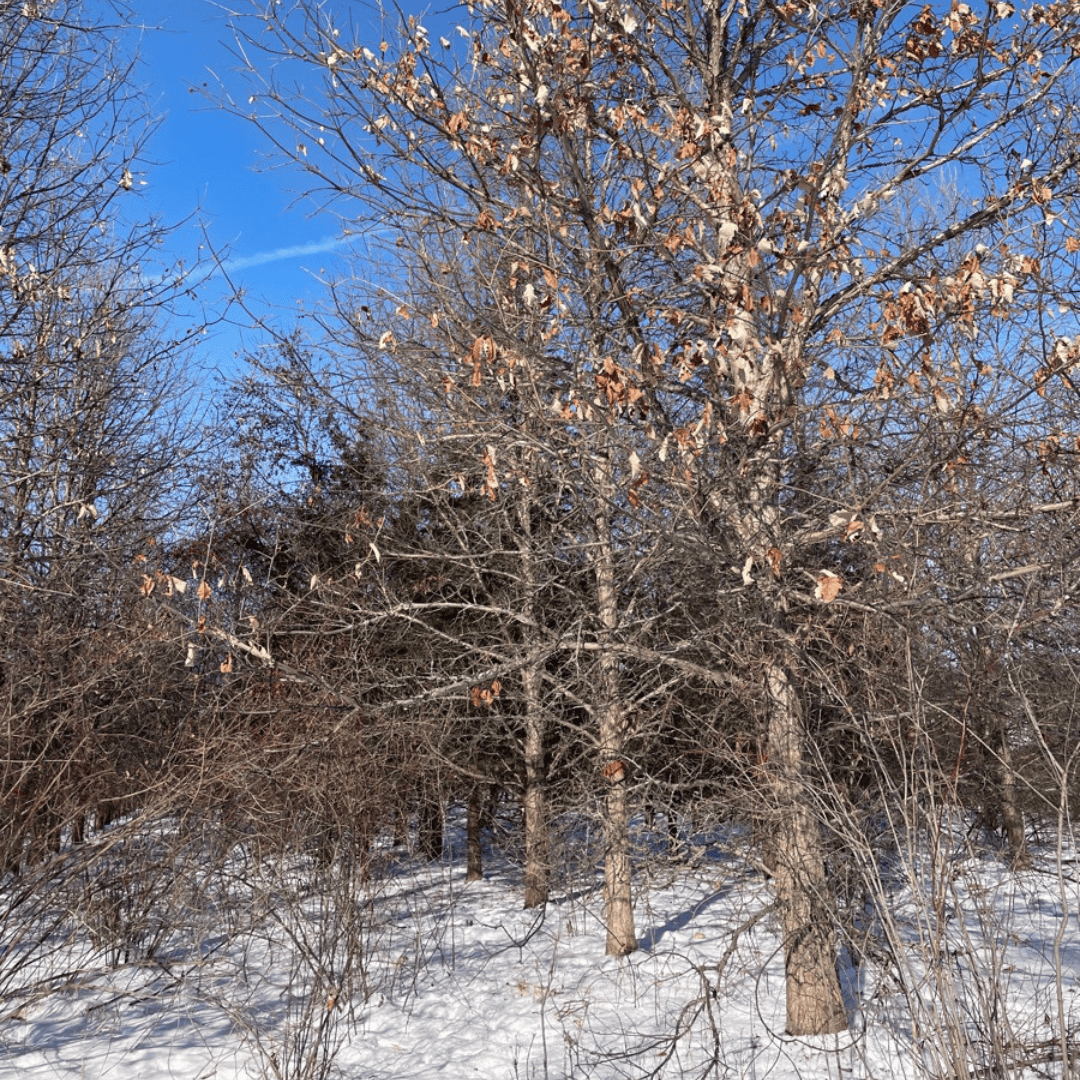
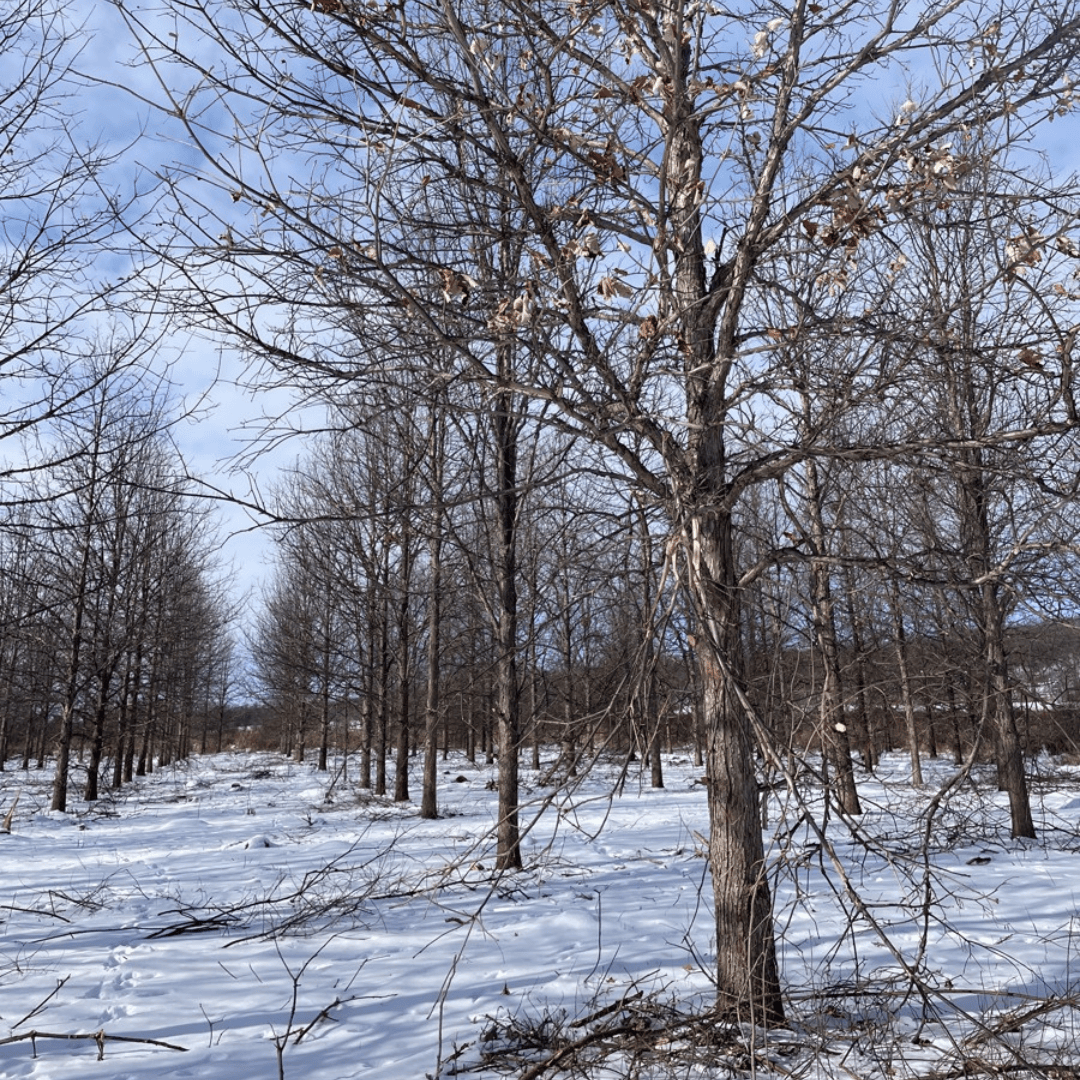
At Erickson Conservation Area in Argyle, where an old plantation of swamp white oaks and tamarack trees was planted back in the ‘90s, we thinned 7 acres into what will eventually become a more naturalized swamp white oak savanna.

Erickson Conservation Area BEFORE thinning.

Photo by Stephanie Judge.

Erickson Conservation Area AFTER thinning.

Photo by Stephanie Judge.

And, elsewhere at Erickson, we gathered with volunteers to burn brush piles collected in past years. On this day – the last of January’s intense cold – we enjoyed the sunny 15 degree conditions along with chili heated to boiling in a cast iron pot on the coals.

DALC staff & volunteers warm up by a fire with chili.

Photo by Stephanie Judge.

Thank you to my colleague Shannon for that wonderful treat, and trick, that she learned while stewarding York Prairie State Natural Area near her New Glarus home!

Whether you’re “a winter person” or not, we know this season has been difficult for all of us as individuals, for our communities and for our country. We also know that “hope springs eternal,” and by this late date in February, the days are getting longer, the natural world is waking up, and we can all feel a little more energy to keep going and keep working toward brighter days and a better future. Thank you for all you do to support your neighbors and communities, including this Driftless community. We SO appreciate you!

Written by Stephanie Judge

DALC Conservation Director

Steph Judge
Welcome Kevin Mason, DALC’s Preserves Manager!

Welcome Kevin Mason, DALC’s Preserves Manager!

We are excited to welcome Kevin Mason to the Driftless Area Land Conservancy team as our new Preserves Manager!

Kevins first came to Wisconsin to attend Lawrence University, and aside from a brief chapter in the Pacific Northwest, the state has been home ever since. Over the years, he has built a career centered on restoring landscapes and helping people connect to them in meaningful ways. Most recently, Kevin spent nearly eight years working with Quercus Land Stewardship Services, where he partnered with private landowners, municipalities, and public agencies to design and carry out ecological restoration projects across southern Wisconsin. 

At DALC, Kevin oversees the management and monitoring of our nature preserves and Driftless Trail segments. His work helps guide these lands towards long term ecological health through practices such as prescribed fire, grazing, and other restoration tools. Just as important, Kevin works closely with partners and staff to ensure stewardship efforts are collaborative, thoughtful, and grounding in care for both the land and the people who experience it.

Kevin is especially drawn to stewarding publicly accessible lands and to the many ways people form connections with natural places. He believes those relationships strengthen individual and community wellbeing, and a perspective that aligns closely with DALC’s mission. 

Outside of work, Kevin enjoys spending time outdoors hiking, camping, paddling, skiing, and biking, often alongside his family. He is also a musician and songwriter who finds inspiration in the natural world, and on clear nights, he can sometimes be found in his backyard gazing at distant galaxies through a telescope.

“I love that the Driftless Area can surprise even lifelong Midwesterners. It is an utterly unique ecological and cultural landscape with many nooks and crannies and hidden surprises. I love watching a half frozen stream gurgle through a valley in the winter, or a bluff prairie bursting with color in July.”

We are grateful to welcome Kevin to DALC, and look forward to the care, curiosity, and leadership he will bring to our preserves and trails across the Driftless Area!

Great Results from Bluebird Nest Box Program

Great Results from Bluebird Nest Box Program

Volunteers work to set up nests.<br />

Gene Kroupa explains how to install a bluebird nest box to Richard & Joann Laufenberg, of Mt. Horeb (Photo by Gene Kroupa)

DALC’s joint bluebird nest box program with the Bluebird Restoration Association of Wisconsin (BRAW) wrapped up its second year on a high note.

This past year’s reporting recipients fledged 387 bluebirds, while the 2024 group added another 268 for a total of 655 from their free nest boxes. Plus, 331 cavity nesters, including Black-Capped Chickadees, Tree Swallows and House Wrens, also fledged from their nest boxes, for a grand total of 986. WOW!

“In 2025, we distributed 160 free nest boxes, plus mounting poles and predator guards,” said Gene Kroupa, program director for BRAW. Most recipients picked them up at sites, such as the Bethel Horizons Camp and Retreat Center near Dodgeville, and received a brief orientation, plus informational materials. Funding came from the Community Foundation of Southern Wisconsin and BRAW members.

Bluebird pair settles into their new home.

A bluebird pair settles into its new home supplied by BRAW (Photo by Pat Ready)

To qualify, recipients had to have suitable habitat on their properties, plus agree to maintain and monitor the nest boxes throughout the season. Then they were asked to send in a summary report at season’s end about the nesting results to BRAW.

“We were impressed with how easy it was to work with BRAW and help Driftless landowners host bluebirds,” said Executive Director Jennifer Filipiak.

For more information about BRAW and attracting bluebirds, go to www.braw.org.